Pipe Bending for Chemical Processing
Corrosion-resistant alloy piping for plants where the fluid attacks the pipe as hard as the pressure does.
What chemical work brings to a bending shop
Reactor and transfer piping, jacketed and heat-traced runs, and the alloy sections carrying acids, chlorides and solvents that eat carbon steel.
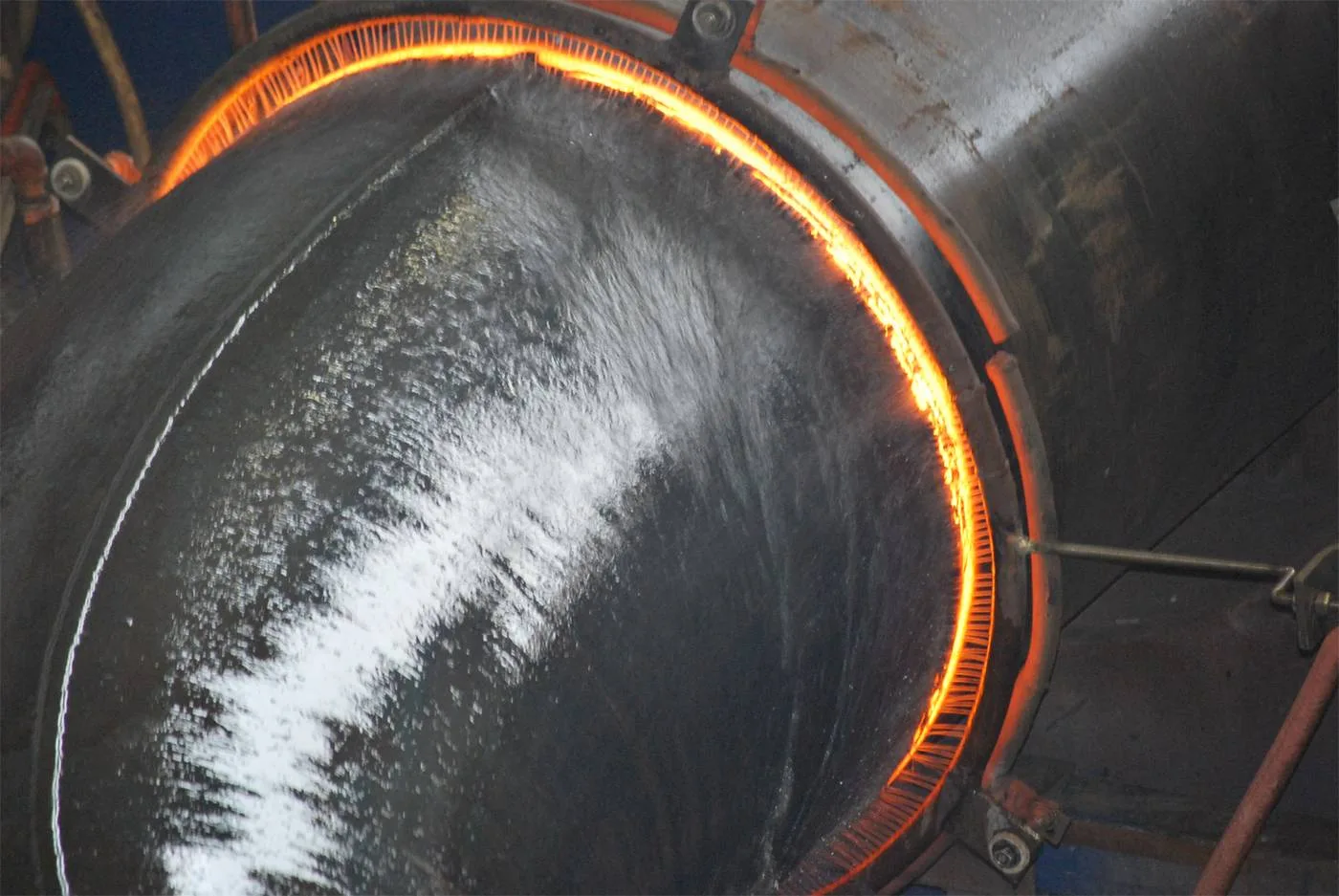
In chemical service the enemy is corrosion, and corrosion finds the place the metallurgy was disturbed. A bend that passed a dimensional check can still fail at the grain boundaries if an austenitic stainless was sensitised on the way through. That is why the process choice matters here: cold bending puts no heat in at all, and where the size forces induction, the cooling rate is the control.
Codes and standards: ASME B31.3 process piping. Material specifications and corrosion acceptance criteria usually govern more tightly than the code does. Send your project specification with the enquiry and we will confirm in writing what we certify against before anything is cut.
Alloys this shop bends
Stainless steel, 2205 duplex, Alloy 6XN, Hastelloy, titanium, nickel-bearing alloys, copper, brass and aluminum, alongside carbon and chrome steels. The point of that range is that a chemical plant rarely runs one material.
Where the service is severe enough that the corrosion allowance is doing real work, wall thinning on the outside of a bend is not a cosmetic number. Send the acceptance limit with the enquiry and we will confirm the tightest radius that holds it.
What to send with a chemical enquiry
Five numbers describe a bend: outside diameter, wall thickness, centerline radius, bend angle and the tangent length on each end. Add the material and the quantity and the job can be priced. A drawing, a sketch or a photograph of a marked-up print all work, and the quote form takes an attachment up to 25 MB.
For chemical service, send the corrosion acceptance criteria along with the geometry. Wall thinning on the outside of a bend eats into the corrosion allowance, so the limit in your specification is doing real work rather than sitting there as a formality. Say what the line carries if you can, because it changes which process we would recommend.
Put the documentation requirements in the enquiry rather than in a later email. Material test reports, non-destructive testing and heat treatment all cost money and time. Retrofitting a documentation package onto a bend that has already been made is slow, and sometimes it is impossible.
Materials we bend
If the grade you need is not listed, ask. This is what comes through most often, not a limit.
What we can bend for you
How we would make it
Wall thickness, radius, material and schedule decide the process. Send the drawing and we will tell you which one fits.
Heat Induction Bending
Cojafex induction bending up through 42″ O.D. and 4″ wall, in any radius, angle or plane.
Read moreCoiling
Helical, spiral wound and serpentine coils, cold, up through 10″ pipe.
Read moreCold Bending
Rotary draw bending on fourteen machines, with mandrels and wiper shoes where the radius needs them.
Read moreMandrel Bending
Ball mandrels and wiper shoes for tight radii and thin walls that would otherwise collapse.
Read moreLarge Diameter Pipe Bending
The work most shops turn away: up to 42 inch outside diameter and 4 inch wall.
Read moreStainless and Alloy Bending
Stainless, duplex, Hastelloy, titanium and nickel alloys, bent without wrecking the metallurgy.
Read moreQuestions we get from chemical buyers
Can you bend Hastelloy and Alloy 6XN?
Yes. Both are on the list of materials the shop bends, along with 2205 duplex, titanium and nickel-bearing alloys.
How do you avoid sensitising austenitic stainless?
Where the size and radius allow, cold bending avoids the question entirely because no heat goes in. Where induction is needed, the controlled cooling step holds the rate through the sensitisation range. Send the grade and the corrosion acceptance criteria and it is settled at quote stage.
Do you have a limit on wall thinning?
Your specification sets it, or ASME B16.49 does if it does not. Tell us the limit and we will confirm the tightest centerline radius that holds it for your diameter, wall and material.
Have a drawing? Send it over.
Send a drawing or a sketch and our team will get back to you with a quote.