
Industries
Pipe Bending for Refineries
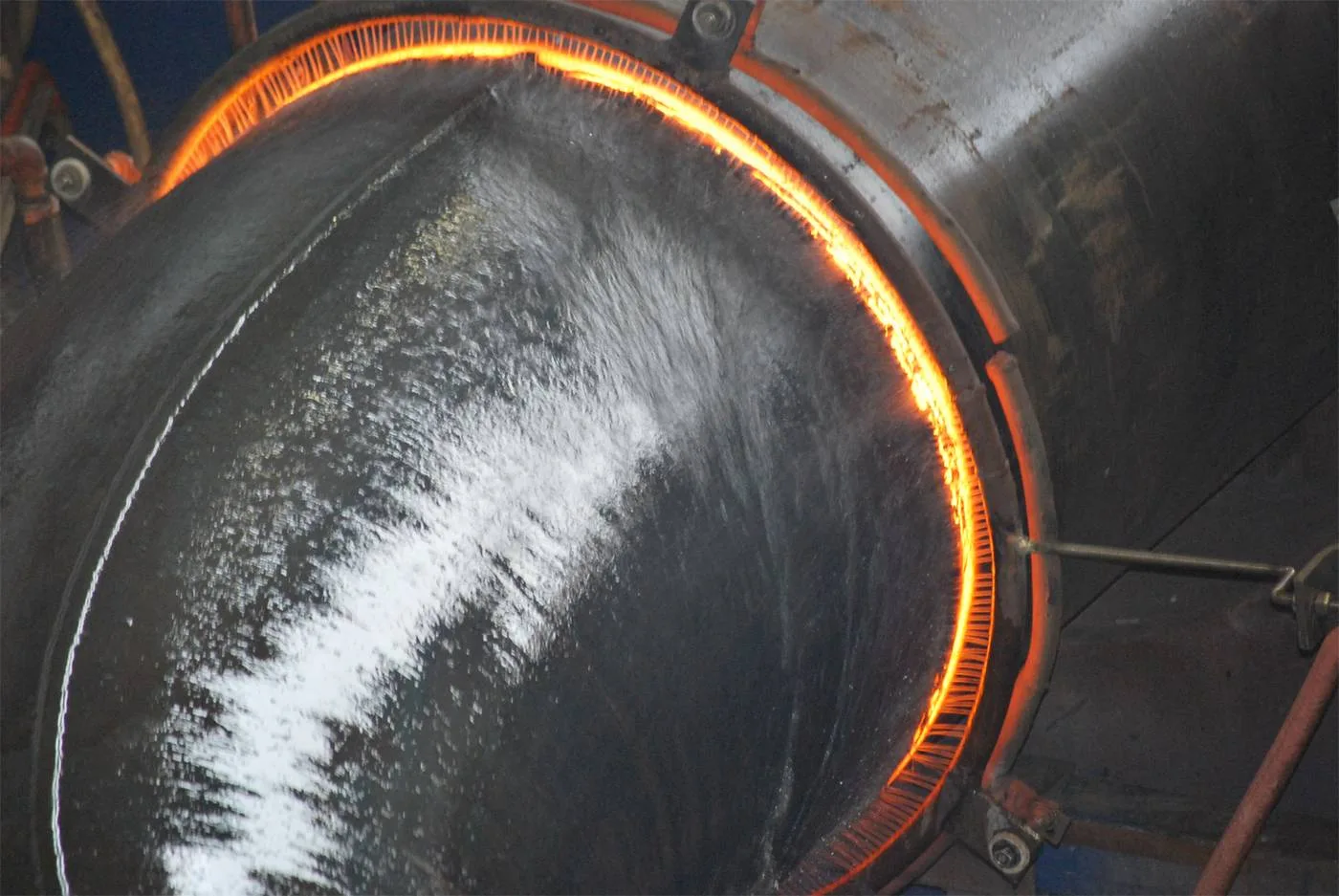
Heater coils, transfer lines and heavy-wall process piping, bent to applicable code requirements and scheduled around refinery turnaround dates.
PIPE BENDING FOR REFINERY APPLICATIONS
American Pipe Bending manufactures custom pipe bends and fabricated piping components for refinery construction, maintenance, and turnaround projects.
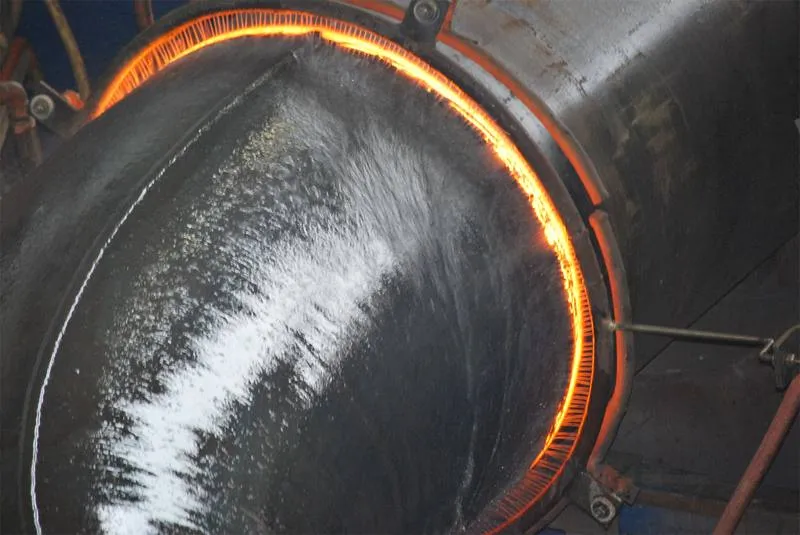
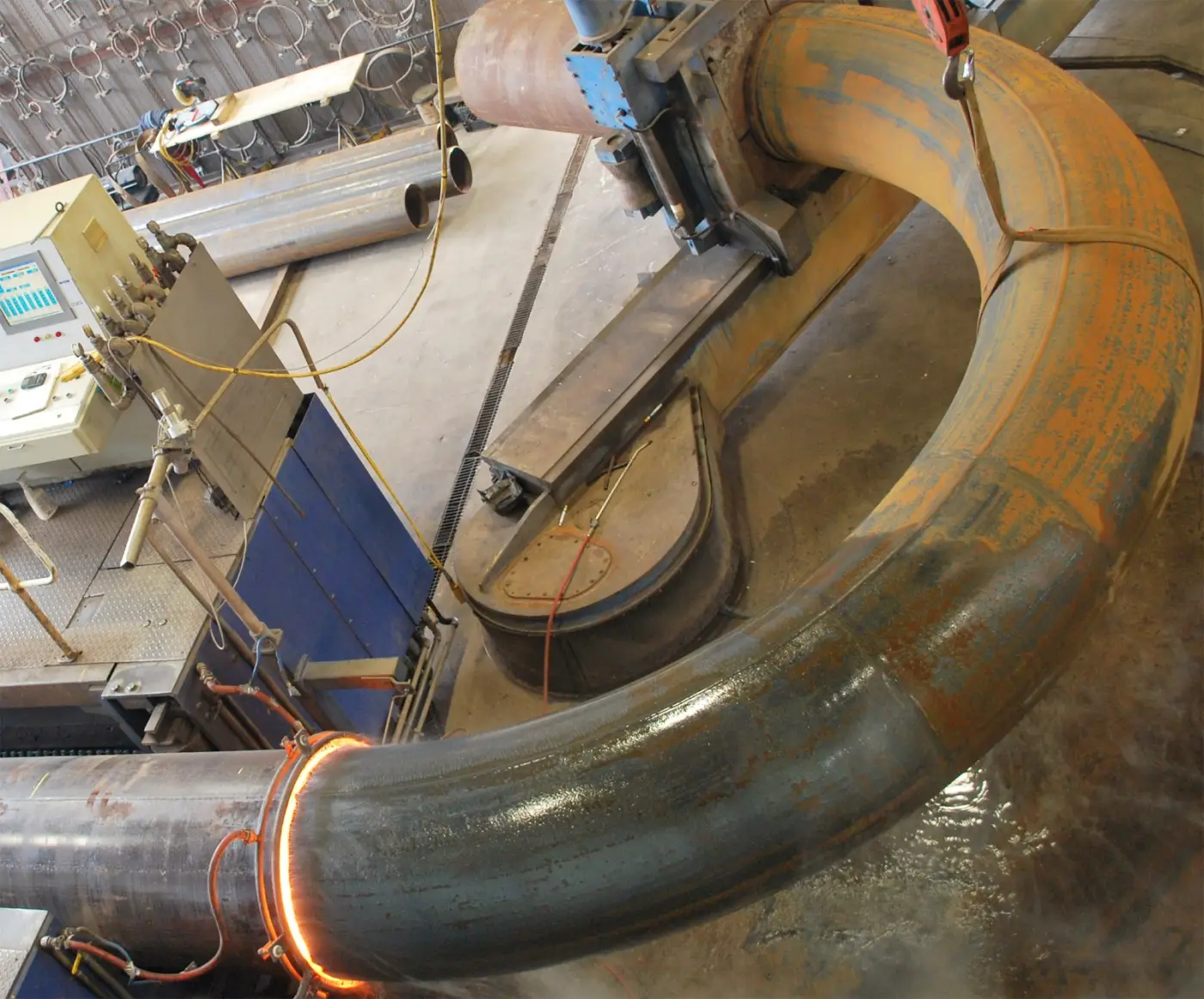
Our capabilities include large-diameter induction bending, heavy-wall pipe bending, tight-radius cold bending, and specialty alloy applications. We work with carbon steel, stainless steel, chrome-moly, and other materials commonly specified for refinery service.
Refinery projects often require close attention to material specifications, wall thickness, dimensional tolerances, heat treatment, non-destructive examination, and documentation. APB reviews these requirements before production to determine the appropriate bending process and manufacturing plan.
Whether the project involves replacement piping for a scheduled turnaround or custom bends for new equipment, our team understands the importance of producing components to the required specifications and delivery schedule.
refinery and heavy-wall projects
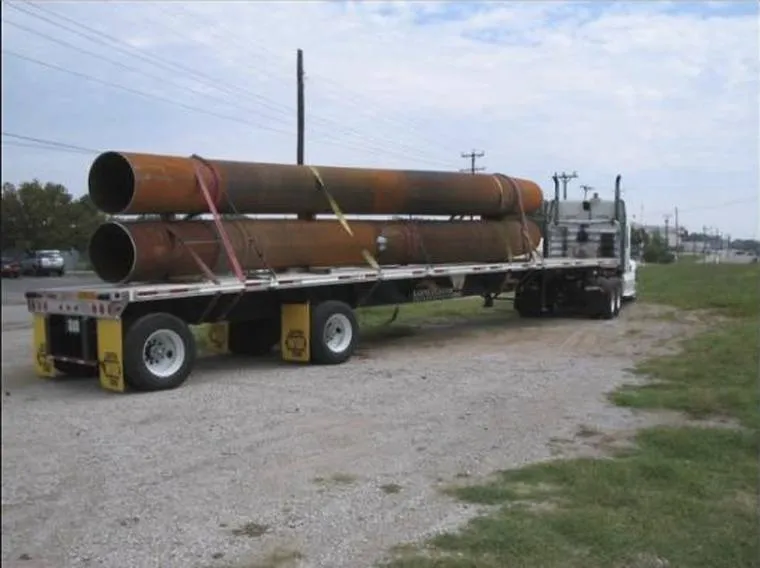
Turnarounds decide the schedule
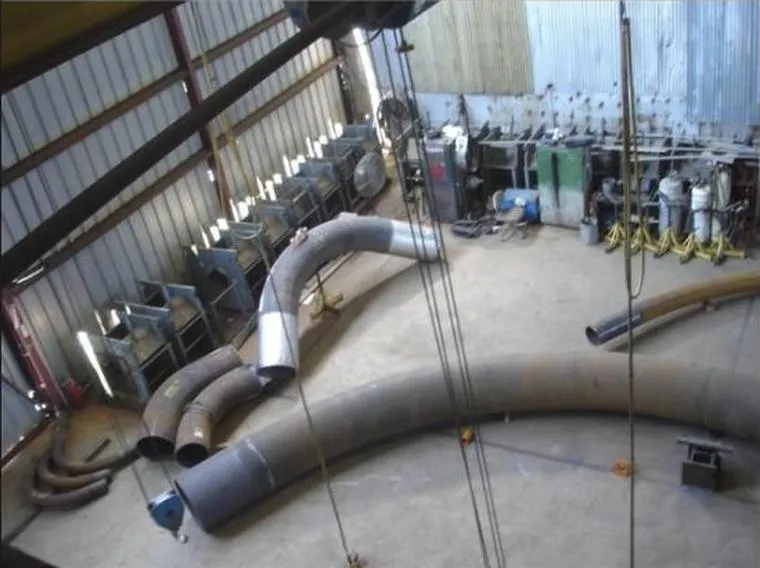
Refinery maintenance and turnaround projects often operate within tightly controlled schedules, where delayed piping components can affect the work of multiple contractors.
APB works with customers to review material availability, bending requirements, testing, heat treatment, and documentation early in the project. Identifying these requirements before production helps establish realistic lead times and avoid unnecessary delays.
For urgent replacement components, our team can evaluate the scope and available production capacity to determine the most practical path forward.
What to send with a refinery inquiry
The five numbers
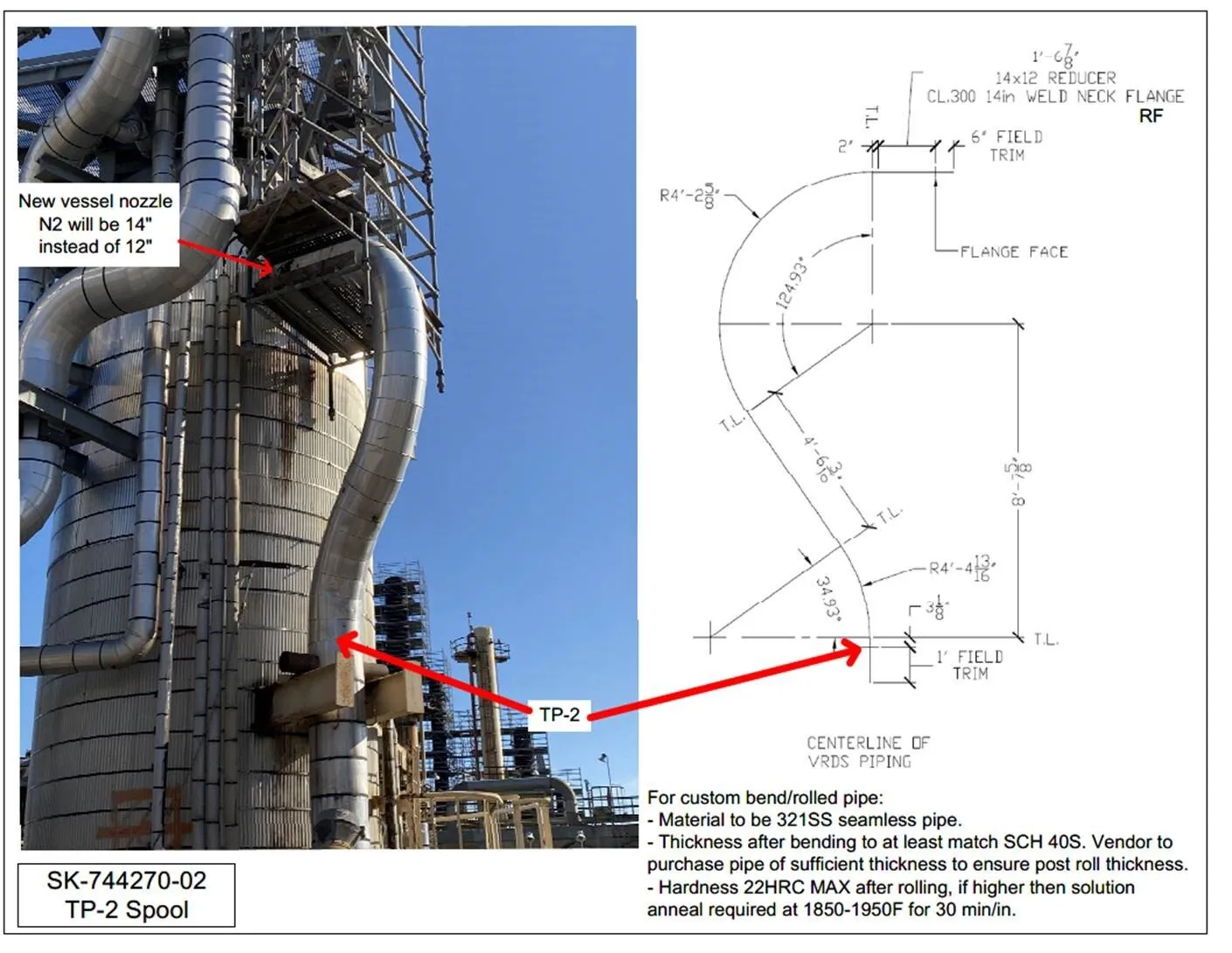
Five key dimensions give us a starting point: outside diameter, wall thickness, centerline radius, bend angle and tangent length at each end. Material, quantity, applicable specifications and project requirements are also needed to prepare an accurate quote.
What the part does in service
For refinery work, include the unit and service along with the pipe dimensions. A transfer line bend and a fired heater coil bend may have the same diameter but very different operating conditions and acceptance criteria. Those differences can affect allowable wall thinning, inspection requirements and material specifications. Include the anticipated turnaround date with your inquiry so we can evaluate the schedule before quoting.
The paperwork, up front
Include documentation requirements with the initial inquiry rather than adding them in a later email. Material test reports, non-destructive testing and heat treatment all affect cost and lead time. Adding documentation requirements after a bend has been completed can be difficult, costly or, in some cases, impossible.
Materials we bend
If the grade you need is not listed, ask. This is what comes through most often, not a limit.
Stainless Steel
Carbon Steel
Copper
Brass
Aluminum
Chrome
Titanium
Hastelloy®
Alloy 6XN
2205 Duplex
Nickel-Bearing Alloys
FREQUENTLY ASKED QUESTIONS ABOUT REFINERY PIPE BENDING
Can you manufacture pipe bends to ASME B31.3 requirements?
Yes. American Pipe Bending manufactures custom pipe bends for refinery and process piping applications to applicable ASME B31.3 requirements and customer-specific specifications. Our team reviews material grades, bend geometry, dimensional tolerances, wall thickness requirements, heat treatment, testing, and documentation before production.
What materials can you bend for refinery applications?
Our experience includes carbon steel, stainless steel, chrome-moly alloy steels, duplex and super duplex stainless steels, nickel alloys, and other specialty materials commonly used in refinery and petrochemical applications.
We work with a wide range of material specifications, including ASTM A106, A312, A335, and other customer-specified grades. If your material is not listed, send us the specification for review.
Can you manufacture bends that eliminate welds and fittings?
Yes. Depending on the application, induction bending and cold bending can produce the required geometry from a continuous length of pipe, eliminating the need for multiple welded elbows or fittings.
Reducing the number of welds can simplify fabrication, reduce inspection requirements, and eliminate potential leak points. Our team can evaluate the drawing to determine whether a formed bend is a practical alternative to a fabricated assembly.
Can you provide heat treatment, NDE, and material documentation?
Yes. American Pipe Bending can coordinate project-specific heat treatment, non-destructive examination, material verification, and documentation as required by the applicable code or customer specification.
Available services include radiographic testing (RT), ultrasonic testing (UT), liquid penetrant testing (PT), magnetic particle testing (MT), hardness testing, and positive material identification (PMI). Documentation can include material test reports, inspection records, NDE reports, heat treatment records, and certificates of conformance.
Can you manufacture large-diameter and heavy-wall bends for refinery projects?
Yes. American Pipe Bending has induction bending capabilities through 42″ outside diameter and wall thicknesses up to 4″, along with extensive cold bending equipment and tooling.
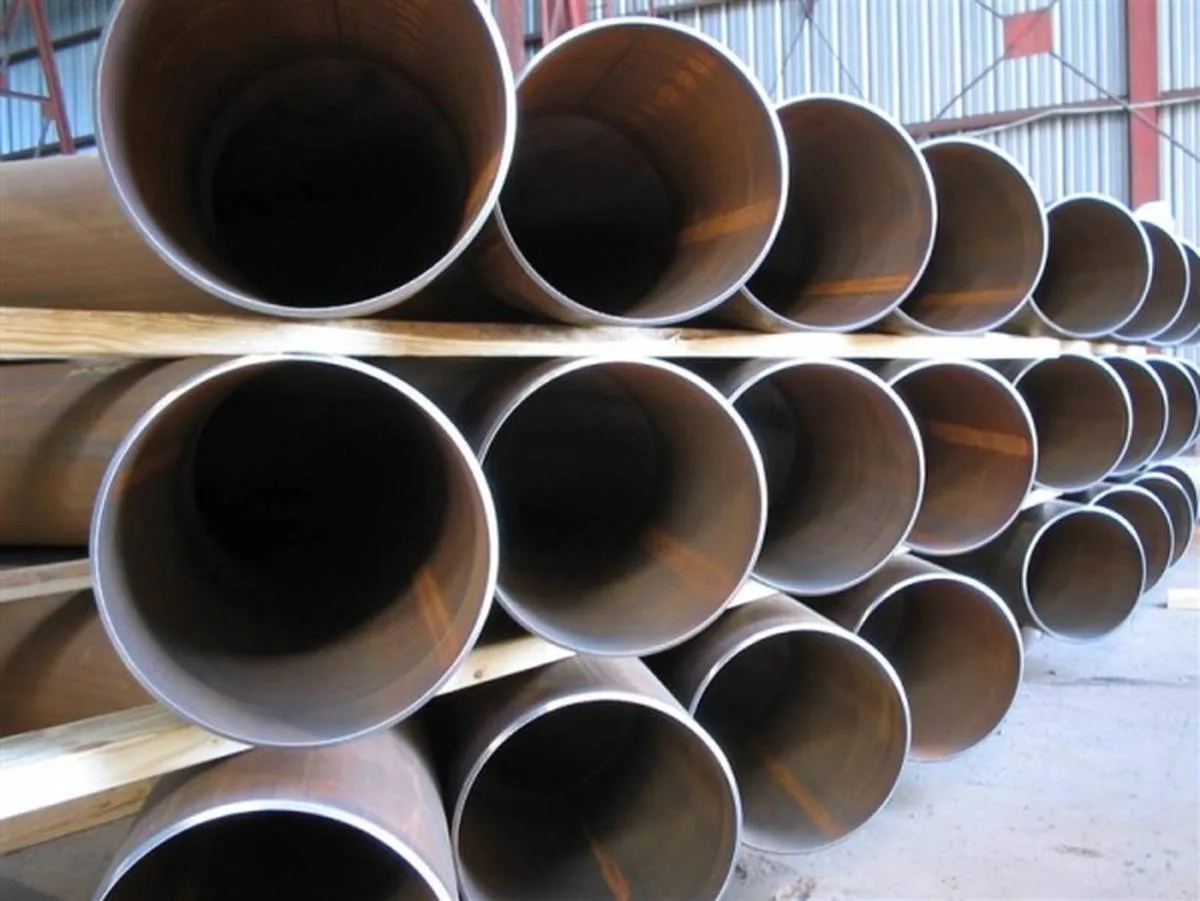
Our capabilities accommodate everything from smaller-diameter process piping to large-diameter, heavy-wall applications. Bend radius, material, wall thickness, and project specifications determine the appropriate bending process.
Have a drawing? Send it over.
Send us a drawing, sketch, or project specifications. We’ll review the details and provide a quote for your bending project.