
Capabilities
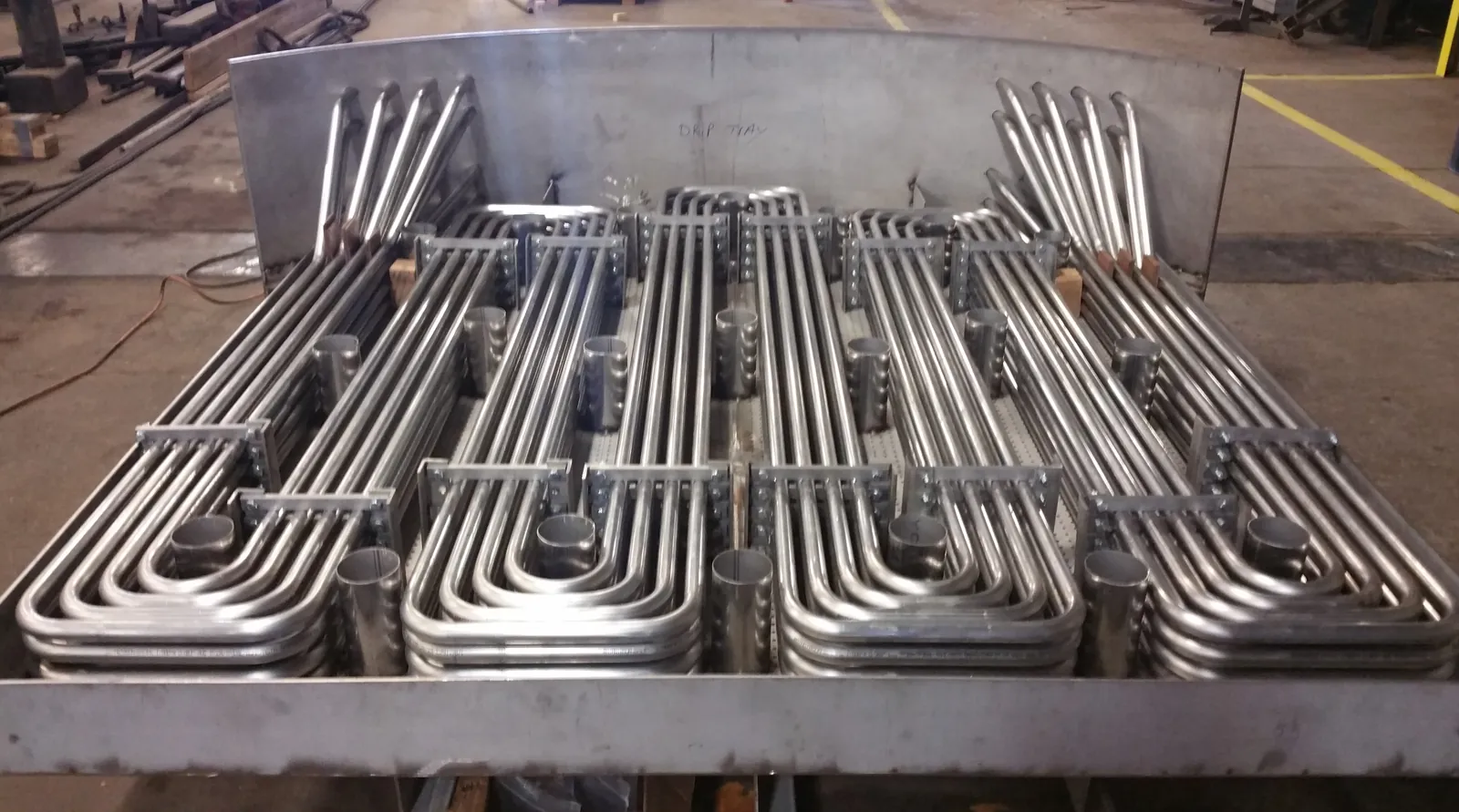
Stainless and Alloy Pipe Bending
Experience bending stainless steels, duplex and super duplex, nickel alloys, titanium and other specialty materials across a wide range of sizes and configurations.
Experience across a wide range of materials
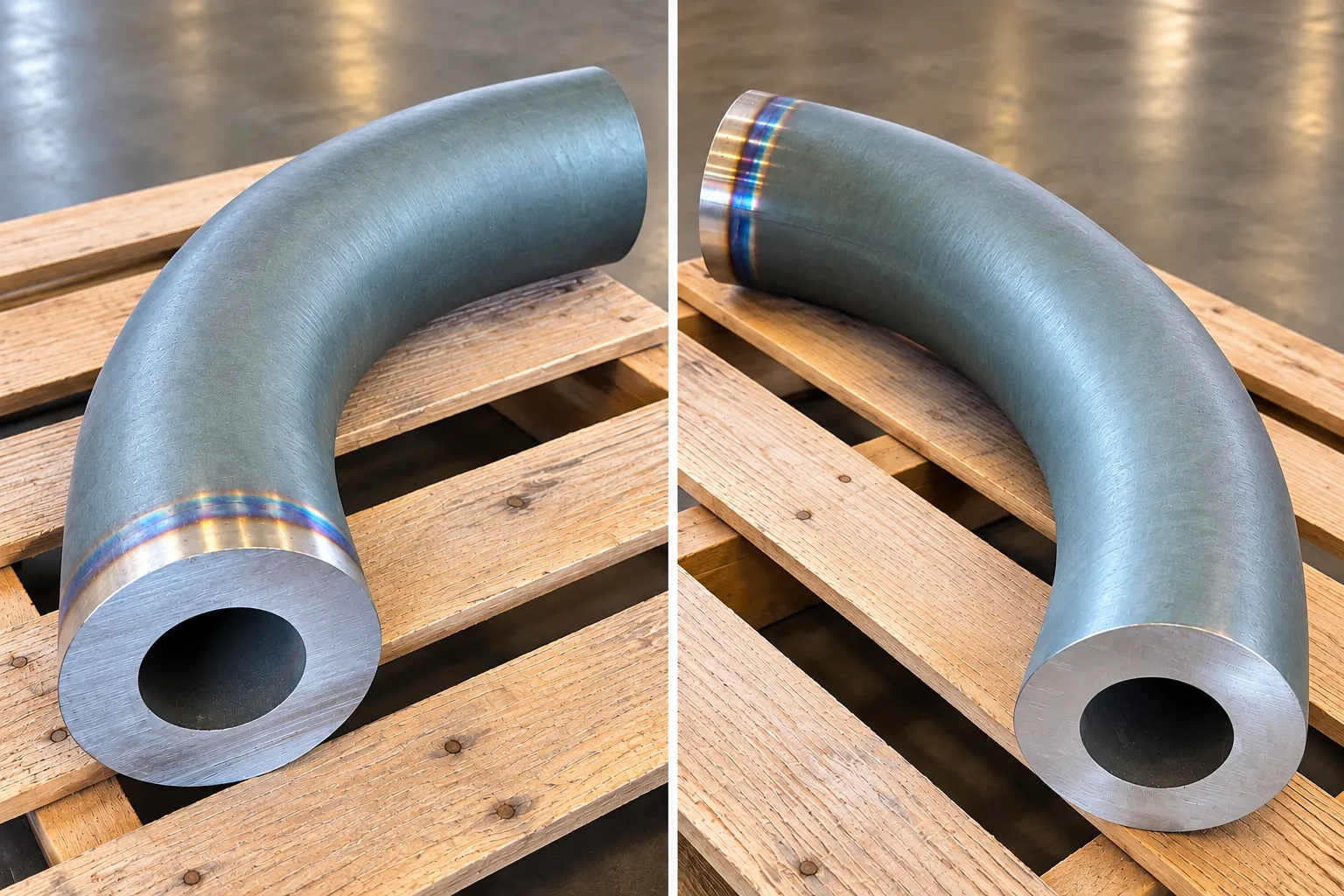
American Pipe Bending has decades of experience bending carbon and stainless steels, duplex and super duplex stainless, nickel alloys, titanium, copper-nickel and other specialty materials. Different alloys respond differently to cold working, heat input, forming and post-bend treatment.
Our experience across cold, mandrel and induction bending allows us to evaluate the material, size, wall thickness, radius and project requirements together to select the appropriate bending process. From common stainless grades to highly specified corrosion- and heat-resistant alloys, each application is evaluated with the goal of achieving the required geometry while meeting the material, dimensional and acceptance requirements of the project.
Stainless
300 & 400 Series
Duplex
Duplex & Super Duplex
Nickel
Nickel & High-Nickel Alloys
Titanium
Specialty Applications
The right process for the material
Material is one of several factors that influence the appropriate bending method. Pipe size, wall thickness, centerline radius, bend angle, dimensional requirements and applicable specifications all influence whether a part is best suited for cold, mandrel or induction bending.
Where geometry allows, cold bending can provide an efficient solution without the localized heating used in induction bending. For larger diameters, heavier walls or configurations better suited to hot forming, induction bending provides controlled, localized heating during the bending process.
Specialty alloys may also require specific heat treatment, testing or inspection before or after bending. These requirements are reviewed with the material specification and customer requirements before production begins.
What to send with an alloy inquiry
For stainless and specialty alloy projects, provide the complete material specification, including the specific grade whenever possible, along with the pipe size, wall thickness, centerline radius, bend angle, tangent requirements and quantity.
Also include the applicable code or project specification and any requirements for heat treatment, NDE, hardness, PMI, corrosion testing, ferrite testing, dimensional acceptance or material documentation. The more we know at the quotation stage, the better we can evaluate the bending method, tooling, testing and post-bend requirements as a complete package.
Materials we bend
Don’t see your material listed? Send us the specification for review.
Stainless steels
304 / 304L / 304H • 310 • 316 / 316L • 321 • 347 • 410 • 904L
Duplex & super duplex
2205 / S31803 / S32205 • Super Duplex Grades
Nickel & high-nickel alloys
Inconel® 600 / 617 / 625 • Incoloy® 800 / 800HT / 825 • Hastelloy® C22 / C276 / B3 • Alloy 20 • Alloy 6XN
Nickel & copper alloys
Nickel 200 / 201 • Monel® 400 / K-500 • Cu-Ni 70/30 & 90/10
Titanium
Grade 2 and other project-specific grades
Carbon & alloy steels
A53 • A106 • API 5L • and other specified grades
Chrome-moly / Cr-Mo alloy steels
P11 / P22 / P9
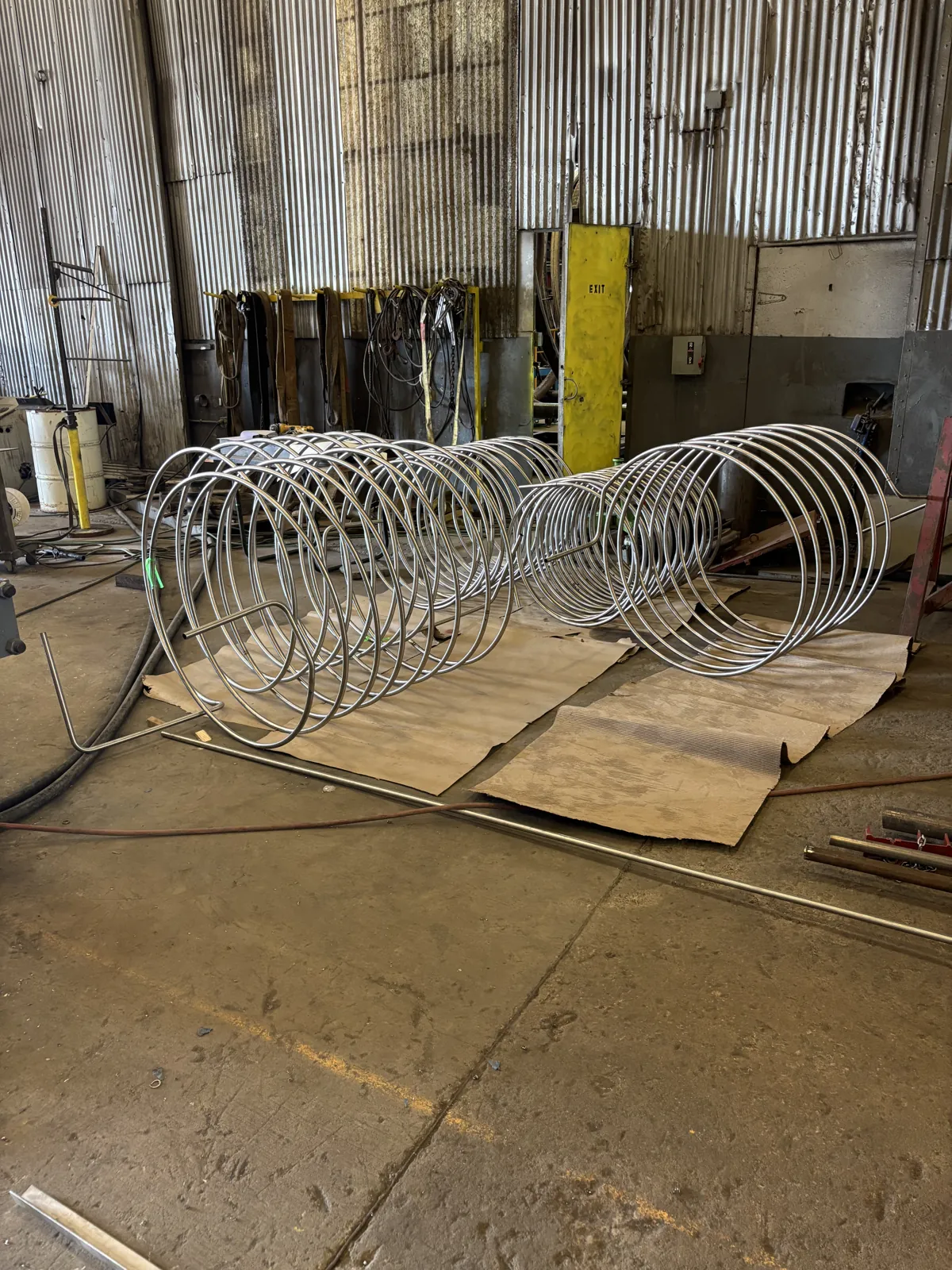
Off the floor
Quality, testing & documentation
Stainless and specialty alloy projects may include material-specific testing, heat treatment, inspection and documentation requirements. These requirements are reviewed during quotation and order review so they can be incorporated into the manufacturing plan from the beginning.
NDE
RT • UT • PT • MT
Material verification
PMI • Elemental Analysis • MTR Review
Material-specific testing
Hardness • Ferrite Testing • Corrosion Testing, when specified
Heat treatment
Stress Relieving • Solution Annealing • Project-Specific Heat Treatment
Documentation
MTRs • NDE Reports • Heat Treatment Records • Inspection Reports • COCs
Codes & specifications
ASME • ASTM • API • MSS • NACE / ISO • Customer & Project Specifications
Explore our capabilities
Different materials and project requirements can call for different bending processes. Explore our capabilities or send us your drawing so we can help evaulate the right approach.
Heat Induction Bending
Large diameter, heavy wall and specialty bending.
Read moreCold Bending
Rotary draw bending with extensive tooling and mandrel capabilities.
Read moreCoiling
Helical, spiral-wound, serpentine and custom coil configurations.
Read moreLarge Diameter Bending
Pipe bending capabilities through 42" O.D.
Read moreCapabilities & Specs
Every size, wall, radius and material we handle, in one place.
Read moreCustom Pipe Fabrication
Bending, welding, cutting, end preparation, testing and assembly.
Read more
Have a drawing? Send it over.
Send us a drawing, sketch, or project specifications. We’ll review the details and provide a quote for your bending project.