Capabilities
Types of Bends
Heat induction bending, coiling and cold bending, from standard bends to the ones thought to be impossible.
Three processes, and how to tell which one you need
The method follows the pipe, not the other way round. Wall thickness, centerline radius, material and schedule decide it between them, and the wrong choice shows up as a collapsed wall, an out-of-round arc or a price nobody wants to pay.
As a rule of thumb: heat induction bending is for large diameters and heavy walls, where the metal has to be soft to move without thinning. Coiling is for continuous runs of tube or pipe wound to a pitch, for heat transfer. Cold bending is for smaller diameters, tighter radii and repeat production, where the section is small enough to be formed around a die at room temperature.
American Pipe Bending runs all three on one floor, which is the part that matters to a buyer. A piping package rarely contains one size, and splitting it between a large-bore shop and a small-bore shop means two quotes, two schedules and two sets of paperwork. We are also able to bend channel, angle, wide flange, and round and finned tube, not only round pipe.
Pick the process that fits the pipe
Send us the drawing and our team will tell you which one, and why.
Induction Bending
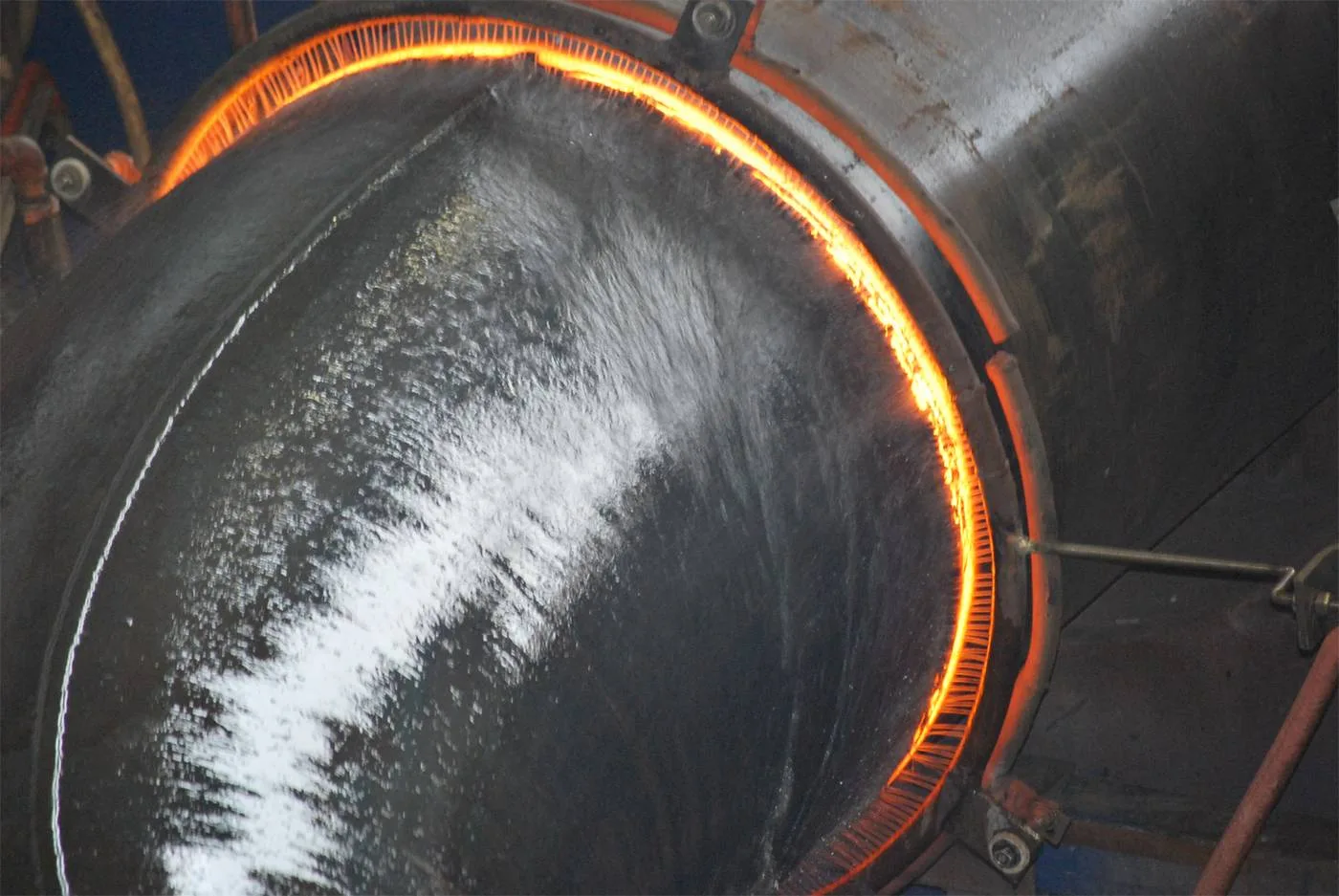
A narrow band of pipe is heated by induction coil and bent in one continuous pass. Large diameters, heavy walls, minimal ovality and thinning.
Helical Coiling
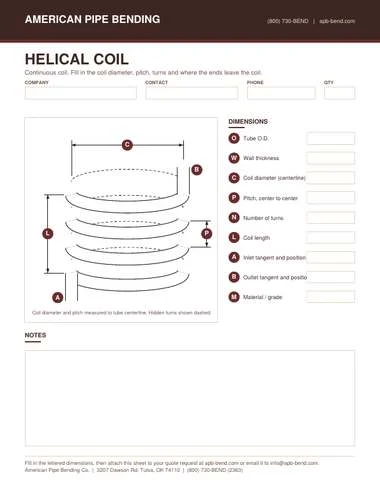
Continuous coils for boilers, heat exchangers and process heaters, wound to your pitch and diameter with consistent spacing from first turn to last.
Cold Bending
Rotary draw bending at room temperature for tighter radii on smaller diameters, structural shapes and production runs that need repeatability.
The five numbers, and why they are the only ones we ask for
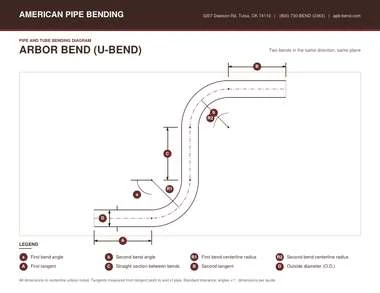
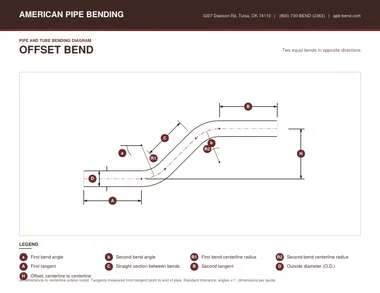
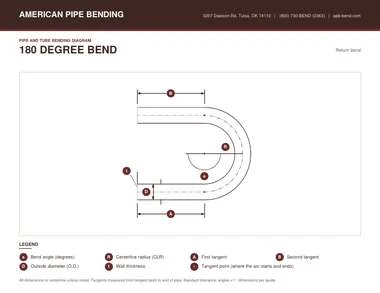
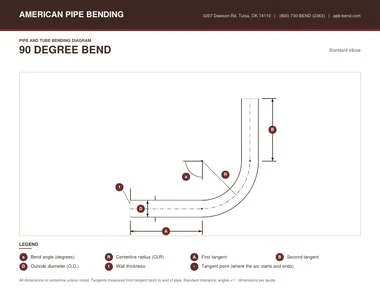
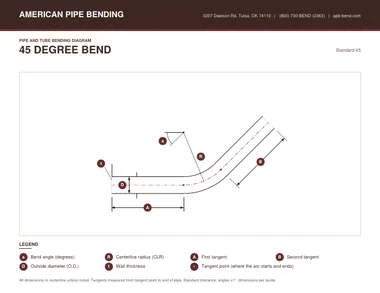
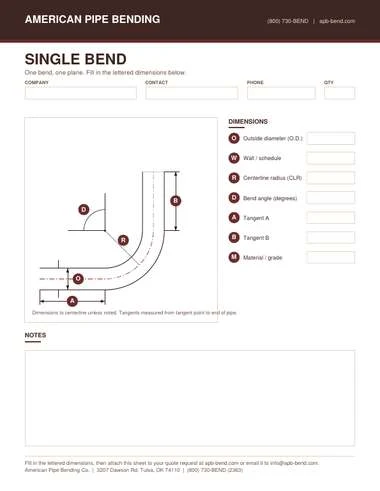
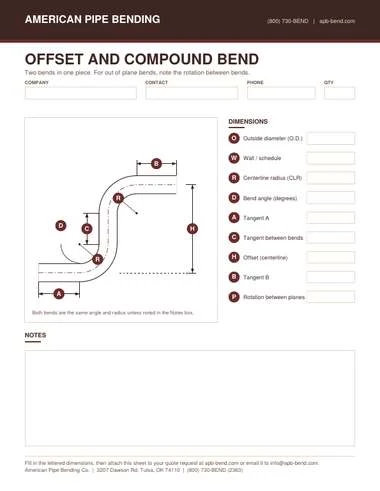
Outside diameter, wall thickness, centerline radius, bend angle and tangent length describe a bend completely. Everything else on a drawing is context.
Centerline radius is the one most often confused. It is measured to the middle of the pipe, not to the inside or outside face, and it is usually written as a multiple of the diameter. A 3D bend on 12 inch pipe has a 36 inch centerline radius. Getting that wrong by a factor of two is the single most common error on an incoming enquiry.
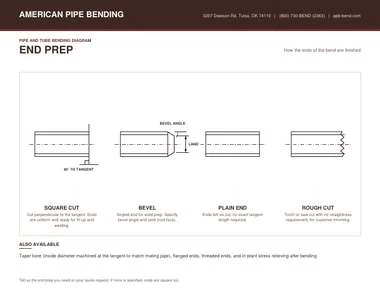
Tangent length is the straight left on each end. It matters for two reasons: the machine needs something to hold, and the tangent is usually where the weld goes. A drawing that dimensions a bend with no tangent is describing something nobody can make.
Bend angle is measured as the change in direction, not as the included angle. A 90 degree bend turns the pipe through a right angle.
More than round pipe
Channel, angle, wide flange, and round and finned tube, in carbon and stainless steel through exotic alloys, brass, aluminum and titanium.
Spec your bend in five numbers
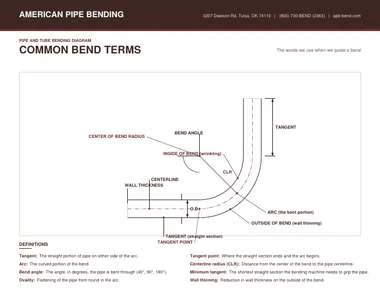
Outside diameter, wall, centerline radius, bend angle and tangent lengths are all we need to quote. The diagrams below show how each one is measured.


Every capability on one floor
Heat Induction Bending
Cojafex induction bending up through 42″ O.D. and 4″ wall, in any radius, angle or plane.
Read moreCoiling
Helical, spiral wound and serpentine coils, cold, up through 10″ pipe.
Read moreCold Bending
Rotary draw bending on fourteen machines, with mandrels and wiper shoes where the radius needs them.
Read moreMandrel Bending
Ball mandrels and wiper shoes for tight radii and thin walls that would otherwise collapse.
Read moreLarge Diameter Pipe Bending
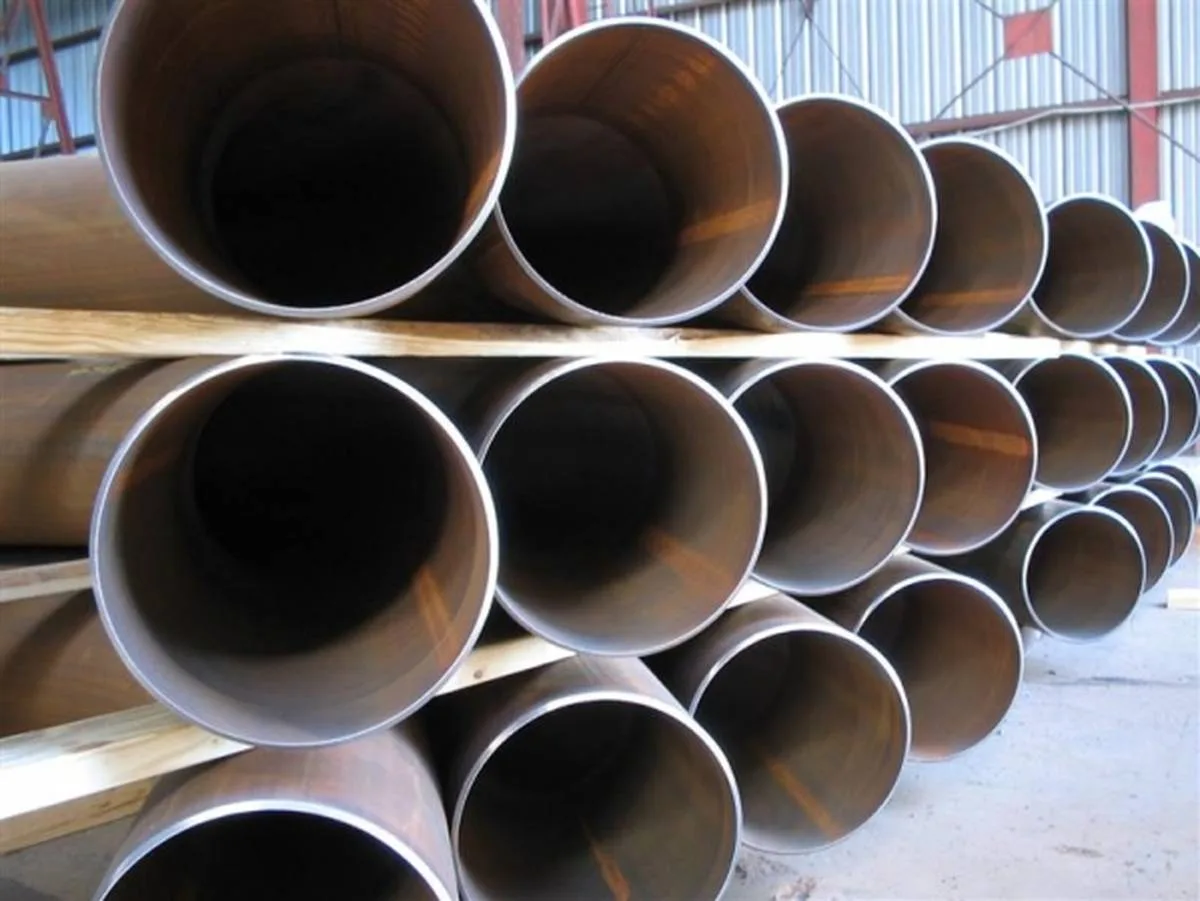
The work most shops turn away: up to 42 inch outside diameter and 4 inch wall.
Read moreStainless and Alloy Bending
Stainless, duplex, Hastelloy, titanium and nickel alloys, bent without wrecking the metallurgy.
Read more
Have a drawing? Send it over.
Send a drawing or a sketch and our team will get back to you with a quote.