Quality Control
Workmanship is checked at every level, and every piece is examined and cross-examined before it leaves.
What a code bend actually requires
A bend is only as good as the evidence that goes with it. American Pipe Bending meets or exceeds ASME Code, Section I and Section VIII under the U and S stamps, along with A.N.S.I., A.W.W.A., PFI-ES24, MSS-SP75 and ASME B31.1, B31.3, B31.4 and B16.49.
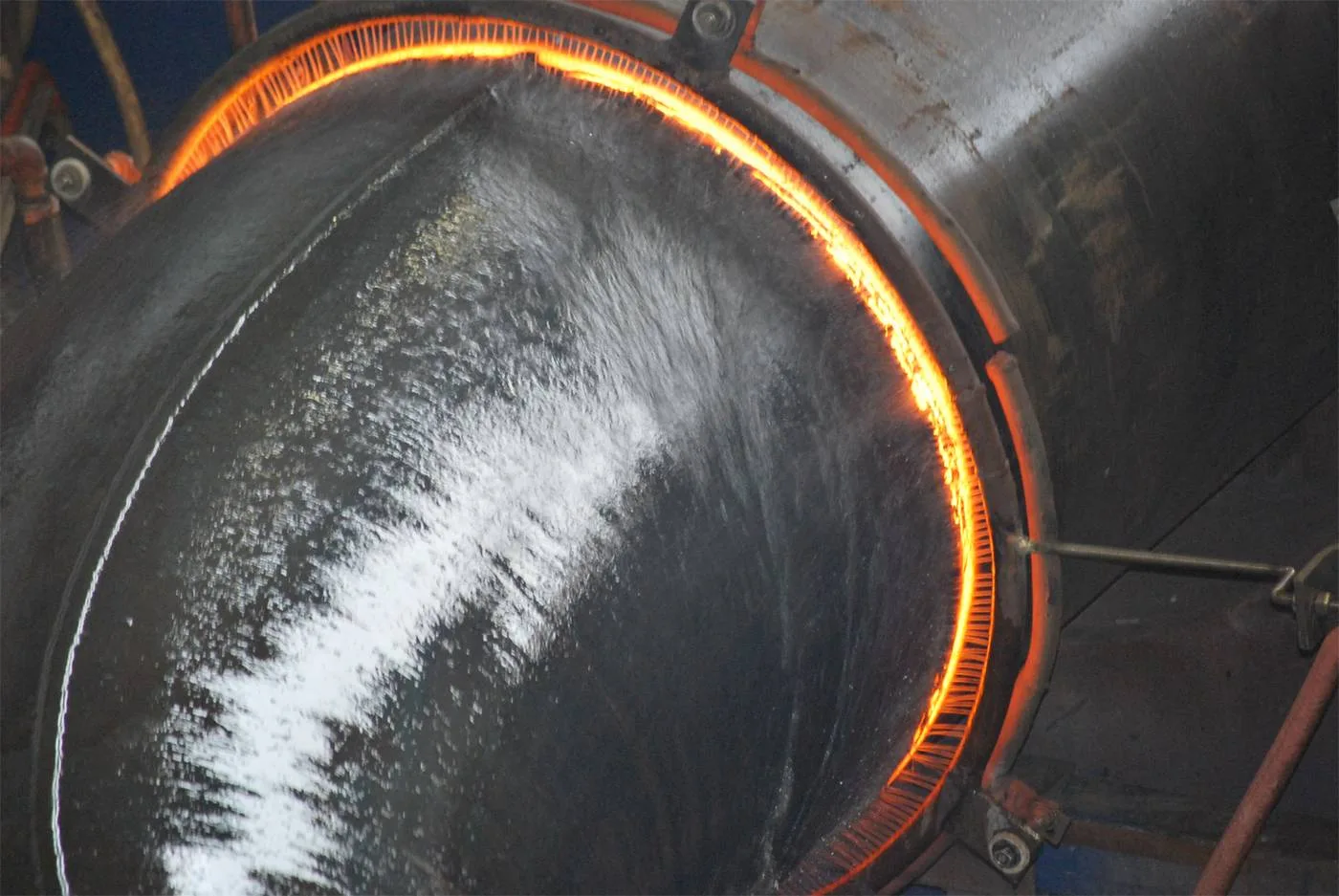
In practice that means the parameters are recorded while the bend is being made, not reconstructed afterwards. On the induction bender every variable is under computer control and the pushing and bending forces are monitored and recorded throughout the pass. Wall thinning on the extrados and ovality through the arc are the two numbers a reviewer will look at first, and they are the two the process is set up to hold.
Non-destructive testing is then applied to whatever your specification calls for. We do not choose the test regime; the purchase order does. What we do is run it in house wherever possible, because sending a bend out for testing adds a shipping leg and a handoff to a schedule that usually has neither to spare.
Testing we can provide
Per your bending specification. Tell us the code and the acceptance criteria and we will tell you what we run here and what we subcontract.
Standards we work to
The list below is what the shop holds itself to. Where your project works to a different code or a customer specification that goes beyond it, send it with the enquiry and we will confirm in writing what we can certify against before anything is cut.
Pressure work
ASME Boiler and Pressure Vessel Code, Section I and Section VIII, under the U and S stamps. This is what allows a bend from this shop to go into a vessel or a power boiler without a separate qualification.
Piping
ASME B31.1 for power piping, B31.3 for process piping and B31.4 for liquid transportation pipelines, with B16.49 for factory-made induction bends. B16.49 is the one that governs the wall thinning and ovality limits on an induction bend, and it is the document most owner specifications point at.
Fabrication and induction bending practice
PFI-ES24 from the Pipe Fabrication Institute, and MSS-SP75 for high-test wrought butt welding fittings. A.N.S.I. and A.W.W.A. standards apply where the work is water or general industrial rather than pressure.
Built to code, every bend
American Pipe Bending is an A.S.M.E. code shop holding the U and S stamps. American Pipe Bending, Inc. is listed in the National Board Manufacturer and Repair Directory.
The two numbers a reviewer checks first
Wall thinning on the extrados
The outside of the arc stretches, so the wall gets thinner exactly where the hoop stress is highest. Every specification puts a limit on how much, usually as a percentage of the nominal wall, and ASME B16.49 sets it for factory-made induction bends where a project specification does not.
It is verified by ultrasonic wall thickness readings taken along the extrados. Tell us the acceptance limit at quote stage and we will confirm the tightest centerline radius that holds it for your diameter, wall and material, before anything is cut.
Ovality through the arc
The section tries to go out of round as it bends, and ovality is how far it gets, expressed as a percentage of the diameter. On a cold bend the answer is internal tooling: a ball mandrel supporting the wall through the tangent point. On an induction bend it is process control, because there is nothing inside the pipe.
Both numbers move together and they trade against the radius. Asking for a tighter radius costs wall thickness and roundness, which is why the honest answer to “how tight can you go” is always a question about the other two.
Documentation is part of the part
On code work the certificates are as much of the deliverable as the bend. Material test reports, non-destructive testing records, heat treatment charts and hardness results all have to arrive together and agree with each other, and a package that does not agree with itself will be rejected as surely as a part that is out of tolerance.
That is the practical argument for running the testing on the same floor as the bend. Nothing is reconstructed afterwards from memory or from somebody else’s paperwork.
Have a drawing? Send it over.
Send a drawing or a sketch and our team will get back to you with a quote.