Skip to content
(800) 730-BEND (2363) Induction, Coiling and Cold Bending
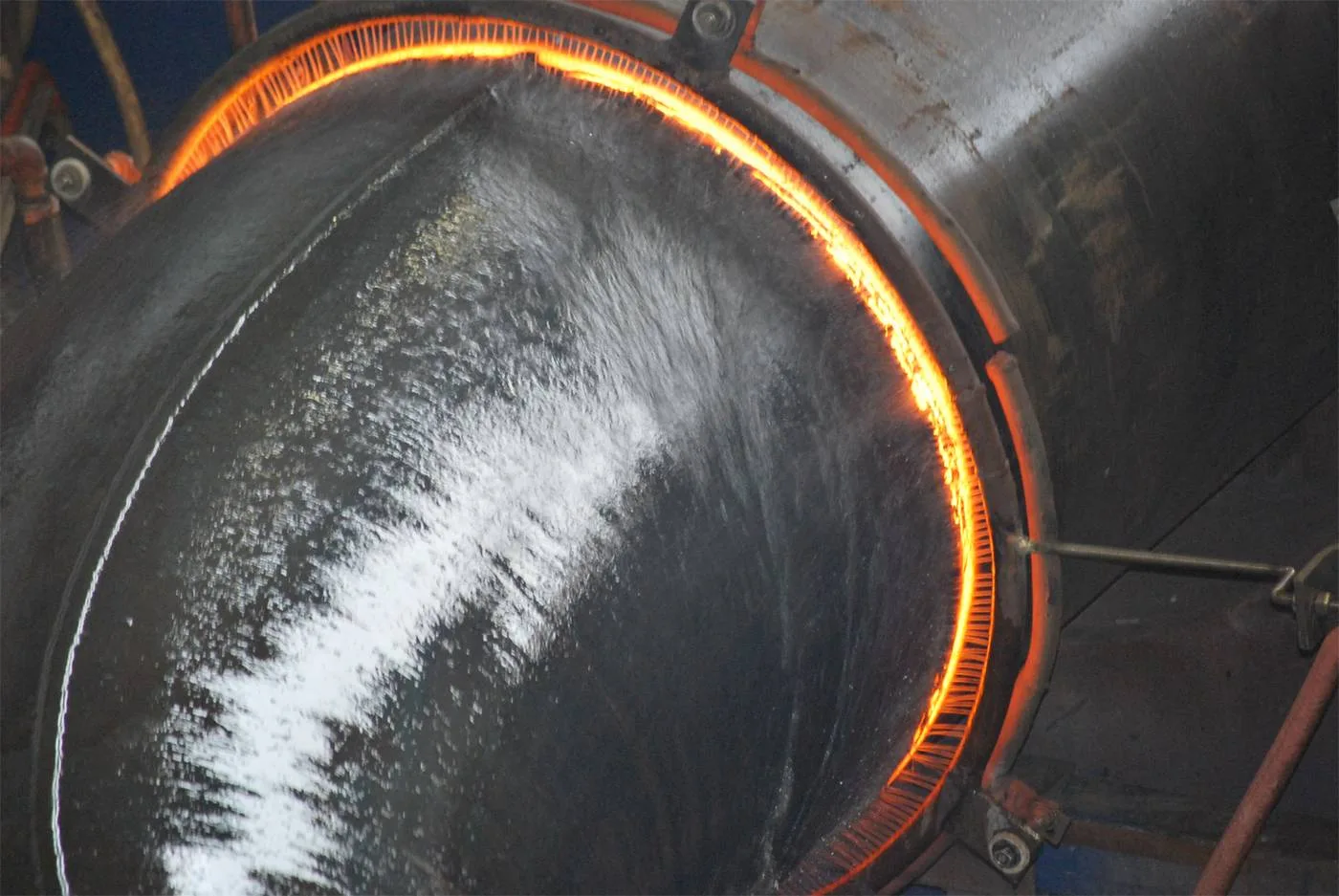
The induction heat band glowing orange around a large-diameter pipe as the bend is formed
Reference

Resources

How a bend is measured, how to choose a process, and what to send with an enquiry.

The five numbers

Every bend is described by five numbers: outside diameter, wall thickness, centerline radius, bend angle and the tangent length on each end. Get those right and a bend can be quoted by anybody. Get one wrong and the part will not fit.

Centerline radius is the one most often confused. It is measured to the middle of the pipe, not to the inside or the outside face, and it is usually quoted as a multiple of the diameter. A 3D bend on 12 inch pipe has a 36 inch centerline radius. Tangent length is the straight left on each end, and it matters because the machine needs something to hold.

The diagrams below show each measurement being taken.

Bend diagrams

How each dimension is measured, for the common bend types.
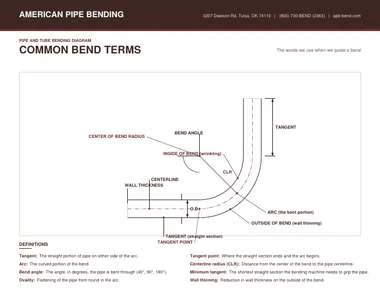
Diagram naming the common bend terms: outside diameter, wall thickness, centerline radius, bend angle and tangent length
Common bend diagramsCommon bend terms
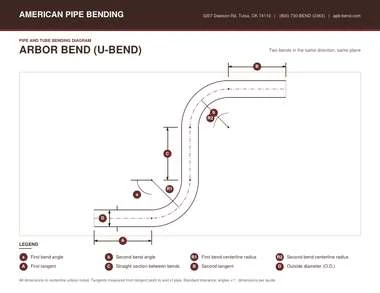
Diagram of an arbor bend showing how it is measured
Common bend diagramsArbor bend
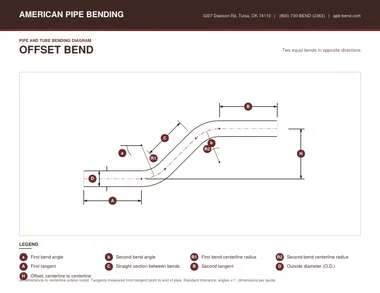
Diagram of an offset bend showing how the offset and tangents are measured
Common bend diagramsOffset bend
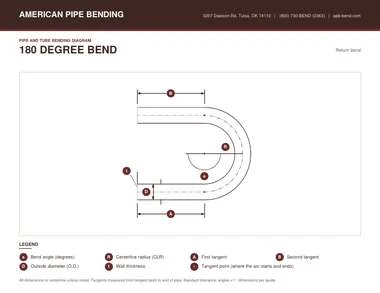
Diagram of a 180 degree bend showing how it is measured
Bend degree diagrams180 degree bend
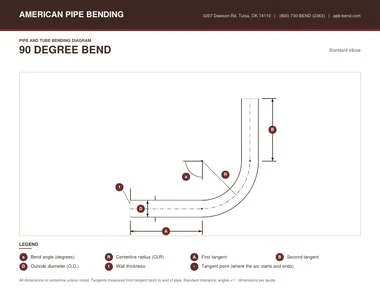
Diagram of a 90 degree bend showing how it is measured
Bend degree diagrams90 degree bend
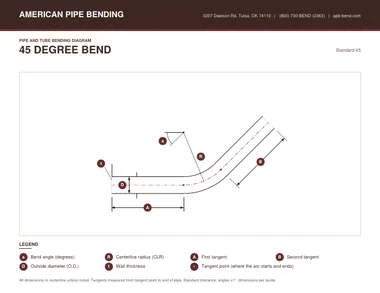
Diagram of a 45 degree bend showing how it is measured
Bend degree diagrams45 degree bend
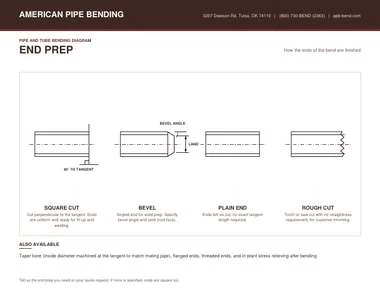
Diagram of pipe end preparation showing bevel angle and land
End prep diagramEnd prep
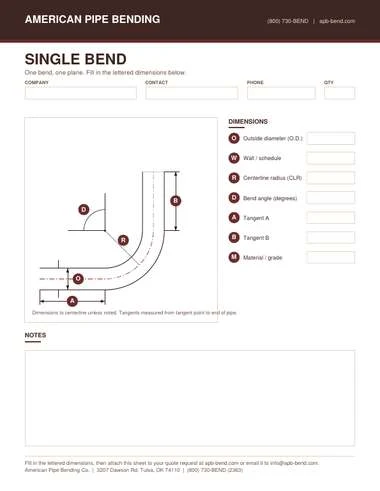
Template for specifying a single bend
Specification templatesSingle bend
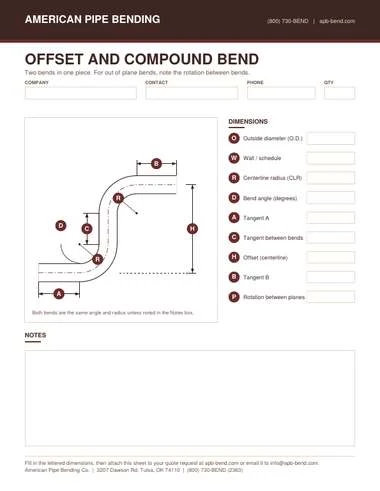
Template for specifying an offset or compound bend
Specification templatesOffset and compound bend
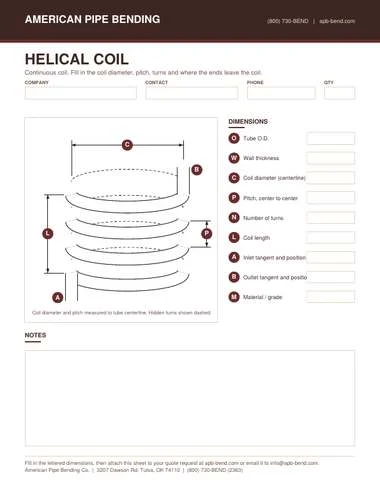
Template for specifying a helical coil, with pitch, coil diameter and number of turns
Specification templatesHelical coil

Choosing a process

When induction bending is the answer

Large diameter, heavy wall, or a radius tight enough that cold forming would thin the outside of the arc past the limit. Induction heats a narrow band so the metal moves without stretching, and it is the only process that reaches 42″ O.D.

When cold bending is the answer

Smaller diameters, production quantities, and any material where a heat cycle would create a metallurgical problem you then have to solve. No heat goes in, so there is nothing to certify afterwards.

When it is a coil, not a bend

Anything whose job is to move heat. If the design problem is fitting as much tube surface as possible inside a fixed shell, it is a coil, and it needs pitch, turns, passes and outlet positions rather than a bend angle.

The three mistakes that cost the most

Quoting the wrong radius

Centerline radius is measured to the middle of the pipe, and it is usually written as a multiple of the diameter. Giving an inside radius, or giving a radius in inches where the drawing meant diameters, is the single most common error on an incoming enquiry. It is also the most expensive one to find late, because the pipe is already cut.

Leaving the documentation until after the order

Material test reports, non-destructive testing and heat treatment all cost money and take time, and they have to be planned from the start. A documentation package cannot be retrofitted onto a bend that has already been made: the tests that were not run cannot be run afterwards, and the material that was not identified cannot be identified once it is formed.

Designing a bend nobody can make

Wall thickness, diameter and radius trade against each other, and past a certain point no tooling and no process will hold the section. A drawing that specifies a very tight radius on a thin wall is describing a part that will flatten, wrinkle or split. Send the three numbers before the design is frozen and you get a straight answer about where the boundary is.

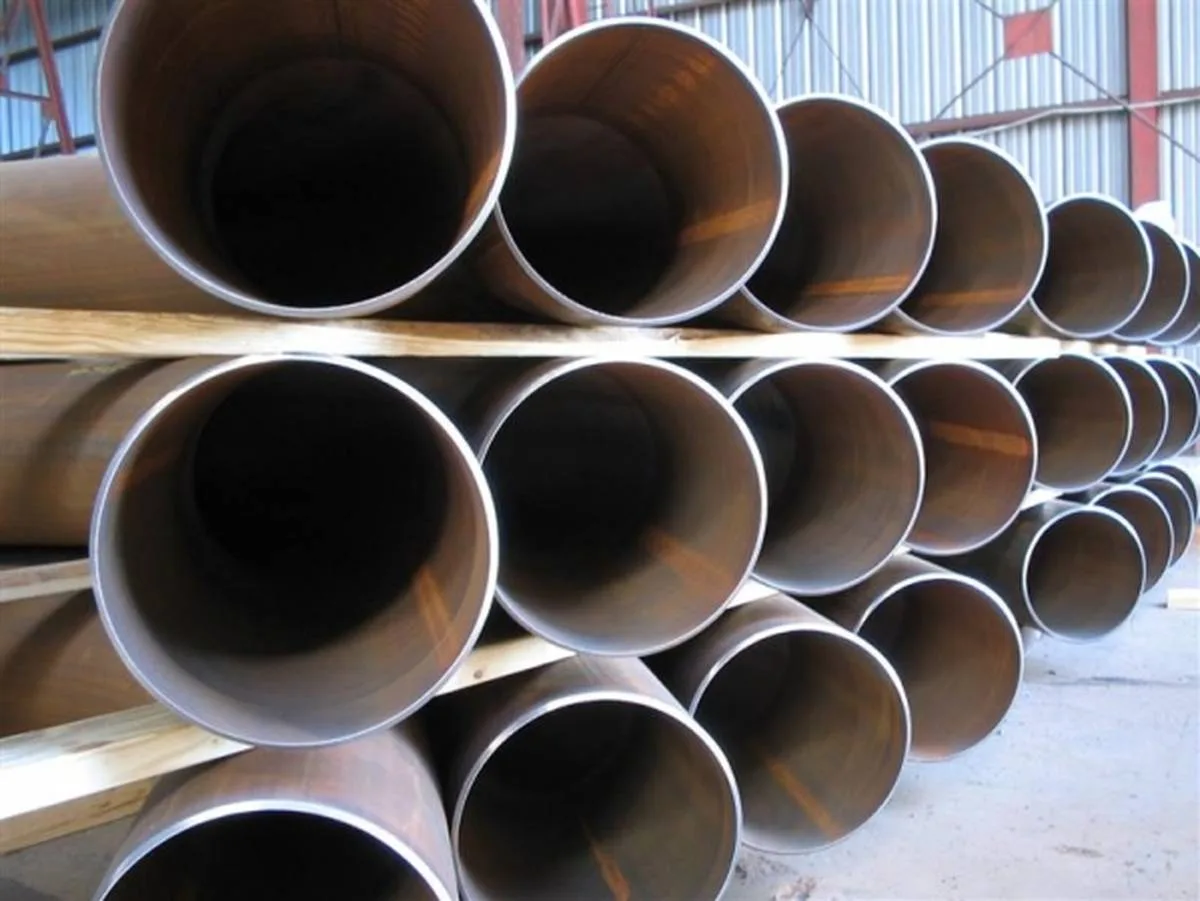
Ends of large-diameter bent pipe stacked under the shop roof

Have a drawing? Send it over.

Send a drawing or a sketch and our team will get back to you with a quote.