Careers
A shop that has done one thing since 1987, and does it at a size very few places can.
What the work is
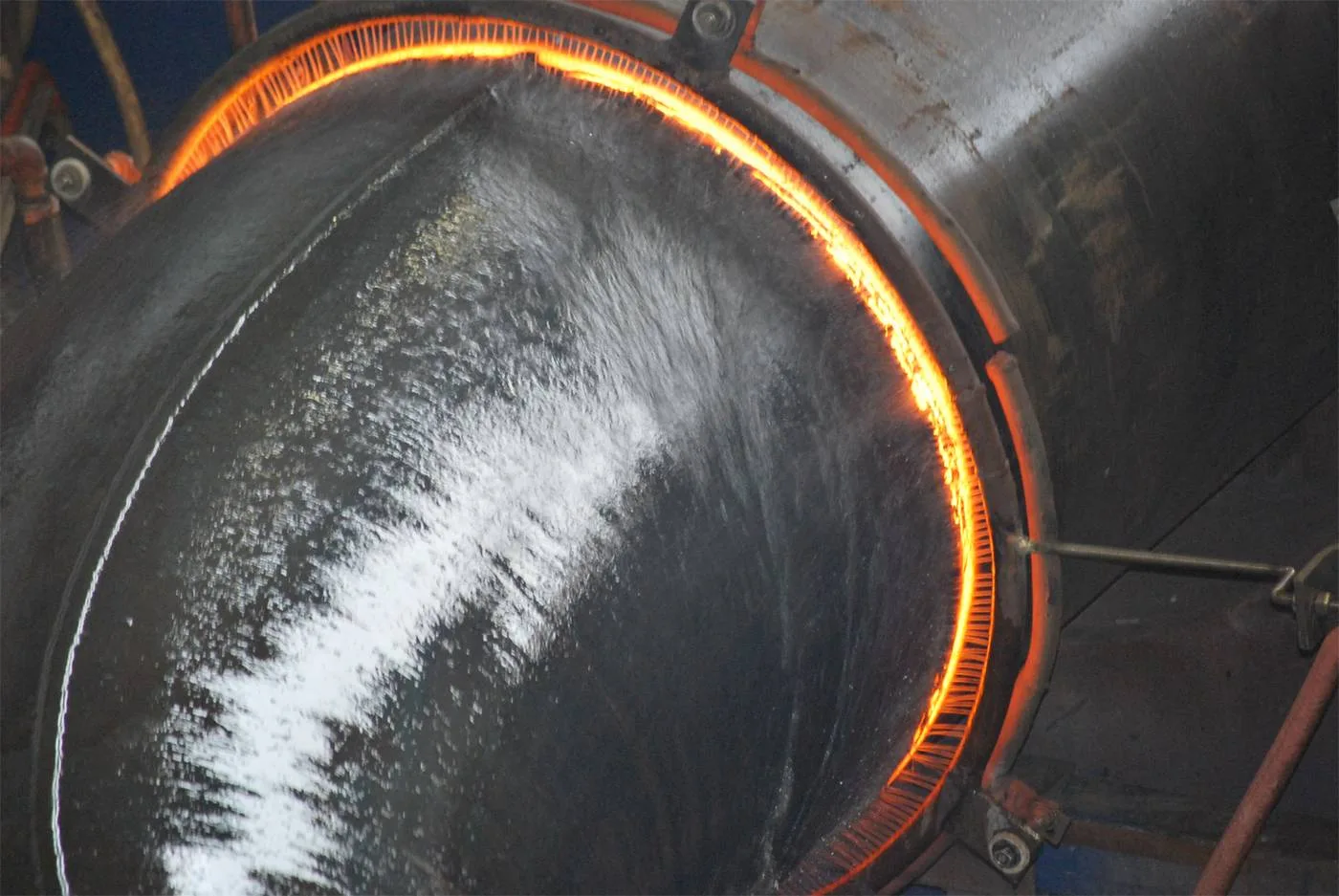
American Pipe Bending bends and coils pipe and tube at 3207 Dawson Road in north Tulsa. The floor covers 100,000 square feet under roof and crane on more than 11 acres, and runs a Cojafex induction bender alongside 14 cold bending machines.
The shift is Monday to Friday, 5:00 AM to 3:00 PM. That is an early start and an early finish, and it is a genuine difference from most fabrication work in the area.
This is skilled trade work. Setting up a bend, reading a drawing, choosing tooling and knowing when a section is going to move the wrong way are things people learn on a floor rather than in a classroom, and they take time.
What the day looks like
The work is physical and it is precise at the same time, which is an unusual combination. A 42 inch section weighs several tons and moves under crane, and the bend it is going into has a wall thinning limit measured in thousandths. Both things are true of the same part on the same shift.
Most of the skill is in the setup rather than the bend. Choosing the die, deciding whether a job needs a mandrel and a wiper shoe, reading how a section is going to behave before it moves: those are the things that separate somebody who has done this for a year from somebody who has done it for twenty. The bend itself is the short part.
Because the shop holds the A.S.M.E. U and S stamps, a lot of what happens here is recorded rather than remembered. Procedures exist, they are followed, and the records go out with the part. If you have worked in a code shop before, that will be familiar. If you have not, it is the biggest adjustment.
How to get in touch
There is no standing vacancy list on this page. If you want to be considered, call the shop on (800) 730-BEND (2363) during working hours, or send a note through the contact form and say what you have done.
Experience in pipe fabrication, structural steel, machining or heavy rigging all transfer. So does a clean record on a crane or a forklift.
What transfers, and what does not
Pipe fabrication, structural steel, machining and heavy rigging all transfer, and so does a clean record on a crane or a forklift. So does anything that involved reading a drawing and being held to it.
What does not transfer is the assumption that speed is the measure. A cold bend that is a minute faster and half a thousandth outside the wall thinning limit is a scrapped length of pipe and a missed date, and on a large-bore induction bend the length of pipe costs more than a day of labour. The pace here is set by the part, not by the clock.
The other thing worth saying plainly is that this is not light work. Sections weigh tons, the shop is hot near the induction bender and the shift starts at five in the morning. People who like that tend to stay a long time, and a lot of the experience on this floor has been here for decades.
That length of service is worth understanding before you apply. This shop has been bending pipe in the same trade since 1987, and a good deal of what it knows is not written down anywhere: which materials move and which fight, what a section sounds like when it is about to go, which drawing conventions mean what. That gets passed on by working next to somebody, which is slower than a course and is why the people who stay are the ones who wanted to learn it.
Questions about working here?
Call the shop during working hours and ask.